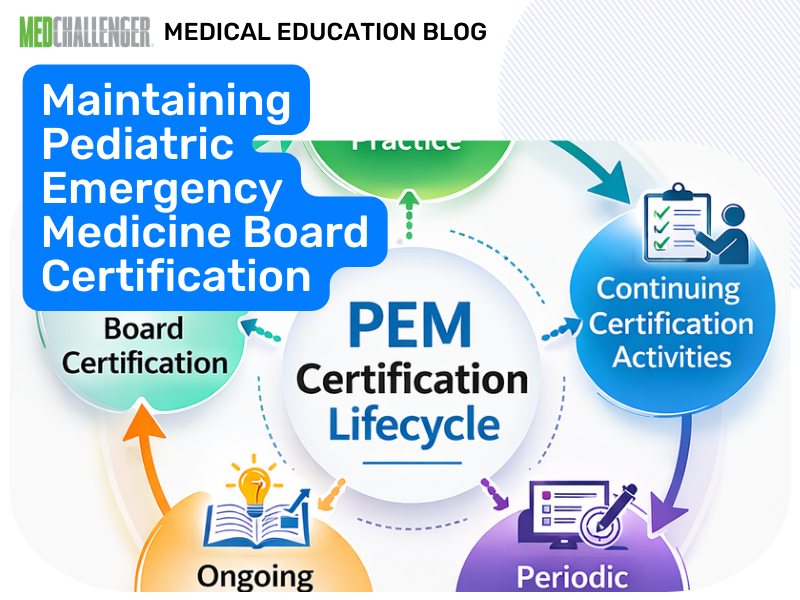
Passing the Pediatric Emergency Medicine (PEM) board exam is a major professional milestone, but board certification does not last indefinitely. Like most medical specialties, pediatric emergency medicine requires physicians to participate in an ongoing certification process to demonstrate continued competence and professional development.
Maintaining Pediatric Emergency Medicine board certification involves participation in a Maintenance of Certification (MOC) program that includes continuing education, professional standing requirements, and periodic assessment of knowledge and clinical practice. These requirements help ensure that pediatric emergency physicians remain current with evolving medical knowledge and continue to provide high-quality care.
Understanding how PEM certification is maintained helps physicians plan their long-term professional development after successfully passing the Pediatric Emergency Medicine board exam. For a broader overview of the certification process, see the Pediatric Emergency Medicine Board Exam Guide.
How Long Pediatric Emergency Medicine Certification Lasts
Pediatric Emergency Medicine certification is not permanent. Once a physician passes the certification exam, the certificate remains valid for ten years.
The certification period begins when exam results are officially issued and continues through December 31 of the tenth year following certification.
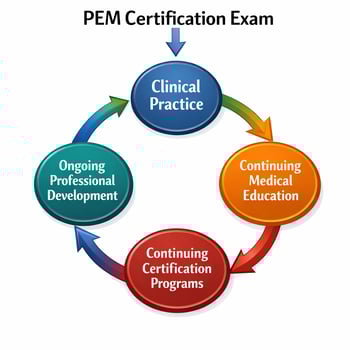
At the end of this period, physicians must meet the requirements of the continuing certification program to maintain their subspecialty certification.
Participation in Maintenance of Certification (MOC)
Physicians certified in pediatric emergency medicine must participate in the Maintenance of Certification program administered by their certifying board.
For physicians certified through the American Board of Emergency Medicine pathway, participation in the Pediatric Emergency Medicine Maintenance of Certification program is required in order to renew certification after the initial ten-year certification period.
Maintenance of Certification programs are designed to support lifelong learning and continuous improvement in clinical practice.
Although the exact requirements may evolve over time, these programs typically include several core components.
Continuing Medical Education and Professional Development
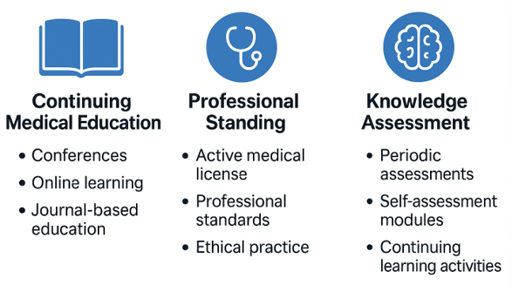
One major component of maintaining board certification is ongoing participation in continuing medical education (CME).
Continuing education allows physicians to remain current with advances in pediatric emergency medicine, including new treatment guidelines, emerging diseases, and evolving clinical practices.
CME activities may include:
- Medical conferences and educational courses
- Online continuing education modules
- Journal-based learning activities
- Simulation training and procedural workshops
These educational activities help ensure that pediatric emergency physicians continue to expand their knowledge throughout their careers.
Maintaining Professional Standing
Physicians maintaining Pediatric Emergency Medicine board certification must also demonstrate ongoing professional standing.
This typically includes maintaining:
- A valid and unrestricted medical license
- Compliance with professional and ethical standards
- Participation in professional development activities
Maintaining licensure and professional standing ensures that certified physicians continue to meet the ethical and professional expectations of the specialty.
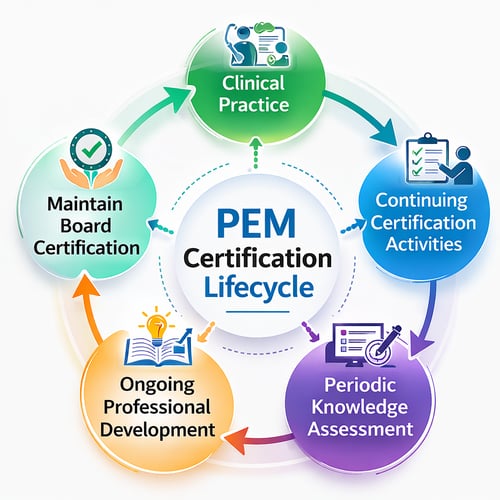
Ongoing Assessment of Knowledge
Many continuing certification programs include periodic assessment of medical knowledge.
These assessments may take several forms, depending on the certifying board’s program structure. Examples may include periodic knowledge assessments, self-assessment modules, or other educational activities designed to reinforce important clinical concepts.
These assessments are intended to promote continuous learning rather than simply repeating the initial certification exam.
Why Continuing Certification Matters
Continuing certification programs help ensure that physicians remain current in a rapidly evolving field of medicine.
Pediatric emergency medicine physicians regularly manage critically ill children, trauma patients, and complex medical emergencies. Ongoing education and periodic knowledge assessment help ensure that physicians continue to practice using the most current evidence and clinical guidelines.
By participating in Maintenance of Certification programs, physicians demonstrate a commitment to lifelong learning and high-quality patient care.
Frequently Asked Questions
How long does Pediatric Emergency Medicine board certification last?
PEM board certification is valid for ten years after successful completion of the certification examination.
Do physicians have to retake the certification exam?
Most continuing certification programs focus on ongoing education and periodic assessment rather than requiring physicians to repeat the full certification exam.
What is Maintenance of Certification (MOC)?
Maintenance of Certification is a continuing certification program that includes ongoing education, professional standing requirements, and periodic assessment of medical knowledge.
Do physicians need to maintain their primary specialty certification?
Physicians must maintain the professional standards required by their certifying board and participate in the PEM continuing certification program to renew their subspecialty certification.
Next Steps: Continuing Your Pediatric Emergency Medicine Certification Journey
Maintaining Pediatric Emergency Medicine board certification is an important part of long-term professional development, but it is only one stage in the overall certification pathway. From fellowship training through board certification and ongoing continuing certification, each step helps ensure that pediatric emergency physicians remain prepared to deliver high-quality emergency care.
If you are early in the certification process, you may want to review the earlier steps involved in becoming board certified. These include confirming eligibility, understanding the exam blueprint, preparing effectively for the exam, and learning how the certification exam is scored.
To see how all of these steps fit together—from eligibility requirements through exam preparation and long-term certification—return to the Pediatric Emergency Medicine Board Exam Guide, where you can explore each stage of the certification process in detail.