Knowing what will happen at Prometric removes most of the stress from exam day. This guide walks you through the entire process step-by-step, from check-in and security procedures to breaks, accommodations, and what the test room actually feels like. Understanding the flow of the day allows you to focus on the ABP General Pediatrics Certifying Exam rather than worrying about logistics.
👉ABP General Pediatrics Certifying Exam 2025: How to Prepare and Pass
What Should You Expect When You Arrive at Prometric?
Your ABP exam-day experience begins the moment you arrive. Prometric requires a valid, government-issued ID, and the name on that ID must match your ABP Portfolio exactly. Staff will verify your identity, assign you a locker, complete security procedures, and guide you to your workstation.
Plan to arrive at least 30 minutes early. Giving yourself extra time protects you from traffic delays, check-in bottlenecks, and the anxiety of feeling rushed before a high-stakes exam.
What ID Do You Need for the ABP Exam?
Prometric accepts these forms of ID:
- Passport
- Driver’s license
- State-issued identification card
The ID must have your photograph and signature.
If your ID name does not match your ABP Portfolio, you may be denied entry. Check your Portfolio well before exam day and correct mismatches early to avoid last-minute problems. It’s a good idea to bring a hard copy of your confirmation.
What Happens During Prometric Check-In?
The check-in sequence is standardized across testing centers and documented in your ABP Exam Day materials. You will complete:
- Identity verification
- An electronic signature
- A photograph
- Locker assignment for personal items
- Metal detector screening
- Pocket checks
- Escort to your workstation
All personal belongings must go into your locker, including:
- Phones
- Watches
- Jewelry
- Notes
- Outerwear
No personal item may enter the testing room unless it has been approved through the ABP accommodation process.
Knowing each step ahead of time helps the check-in feel routine rather than intimidating.
What Security Measures Should You Expect?
Prometric test centers are designed to protect exam integrity.
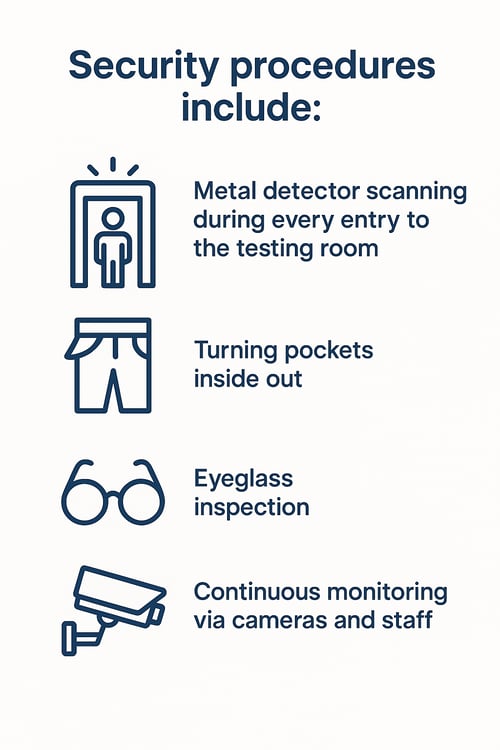
You may also be asked to repeat certain steps after breaks.
None of this is personal — these procedures apply to every candidate and are part of standard high-stakes exam delivery.
What Does Your Testing Station Look Like?
Your workstation includes:
- A computer with standard keyboard and mouse
- Noise-reducing headphones
- A brief on-screen tutorial
- A chair that you can adjust for comfort
Some centers provide laminated note boards and markers, depending on available materials.
Personal earplugs and personal headphones are allowed only if approved as an accommodation.
Take your time with the on-screen tutorial. Becoming comfortable with the navigation tools helps you settle into the exam more confidently.
What Items Are Allowed or Prohibited at Prometric?
Prometric and the ABP list permitted and prohibited items clearly.
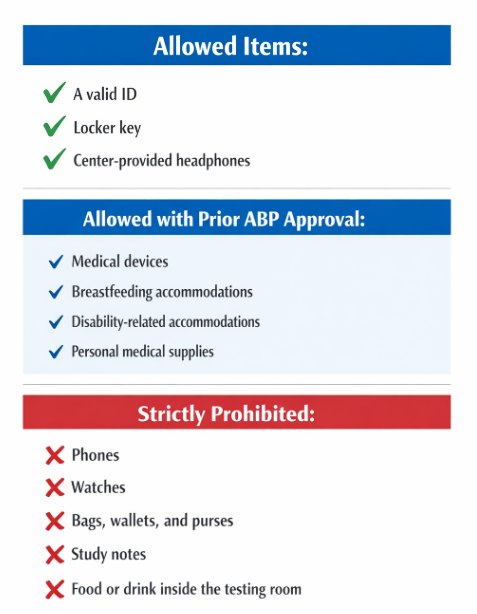
If you need an exception for medical reasons, submit your ABP accommodation request as early as possible.
How Do Breaks Work During the ABP Exam?
The ABP exam contains four timed sections. Breaks occur between sections, and break time counts toward your total seat time.
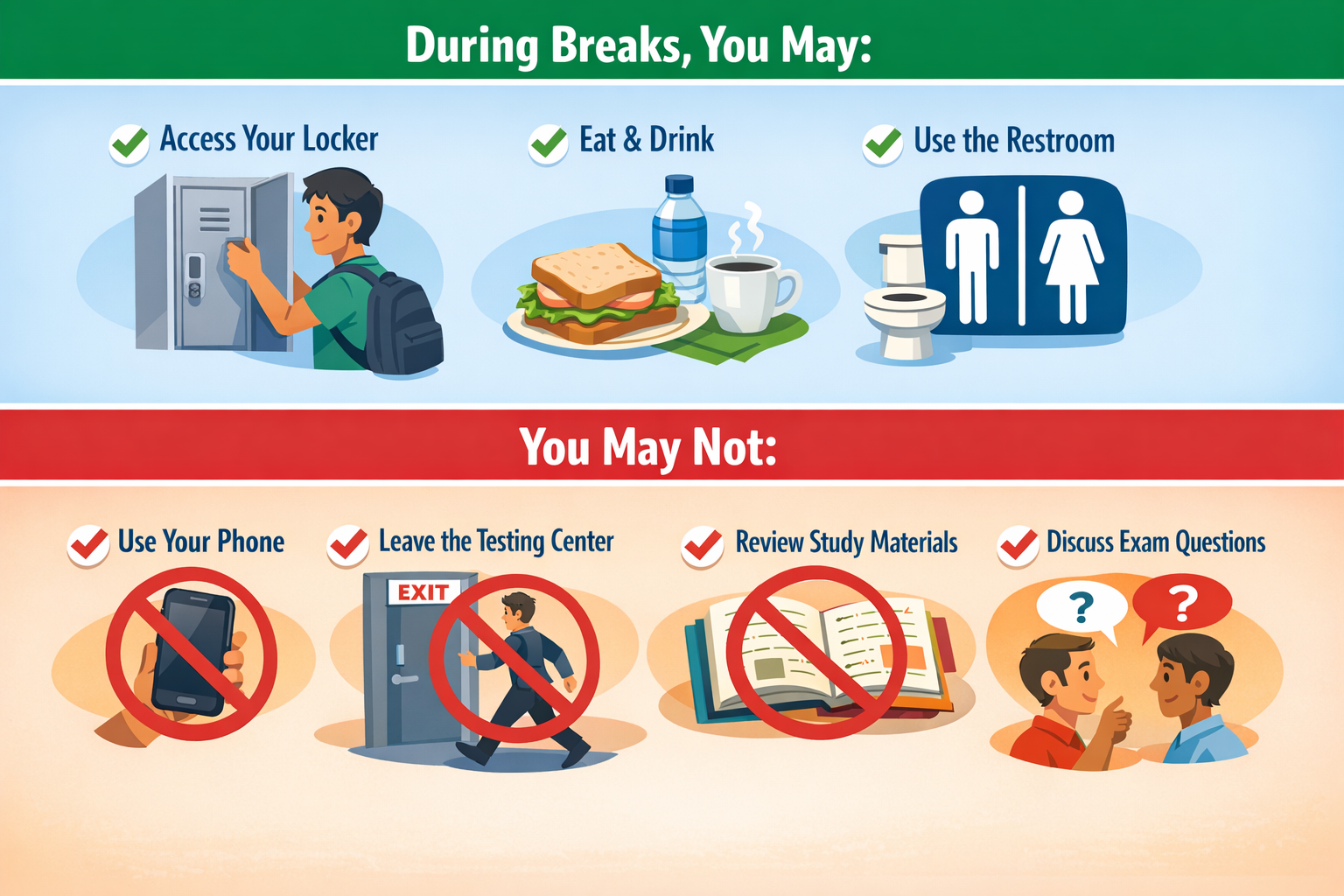
Plan your breaks. Even a short moment to move, hydrate, or reset your breathing can make the second half of the exam feel far more manageable.
What Should You Expect If You Have Accommodations?
Your ABP files outline accommodations for disabilities, medical needs, and breastfeeding.
Accommodation rules include:
- Disability requests must be submitted during registration
- Breastfeeding accommodations require 90 days’ notice
- Personal medical items must be pre-approved
- Your authorization notice will list all approved accommodations
Prometric staff prepare your workstation accordingly.
Arrive early so the team can confirm your setup and ensure everything is correct before your exam begins. Bring a hard copy of your accommodation approval notice to avoid any miscommunication.
👉ABP Exam Dates and Deadlines: What Pediatrics Residents Need to Know
What Is the Atmosphere Like Inside the Testing Room?
The room is quiet, but not silent. You may notice:
- Other examinees entering or exiting
- Keyboard clicks
- Staff movement
- Occasional white noise
Noise-reducing headphones help limit distractions. If your focus drifts, take a moment to reset — most people regain concentration quickly with a brief mental pause.
What Happens After You Finish the Exam?
At the end of the final section, you will complete a brief exit survey. After signing out:
- Return any materials
- Retrieve your belongings
- Speak with staff only if you need to file a report about a technical issue
Prometric does not provide scores. The ABP releases results after scoring analysis and validation.
Expect to feel mentally drained. Give yourself the rest of the day to recover.
FAQs
How early should I arrive at Prometric?
Arrive at least 30 minutes before your scheduled start time to ensure enough time for check-in and security procedures.
What happens if my name doesn’t match on my ID and ABP Profile?
Prometric may refuse to admit you. Update your ABP Portfolio well before exam day.
Can I bring my phone?
No. Phones must be locked in your assigned locker and cannot be accessed during breaks.
Are food and drinks allowed?
Not in the testing room. You may access them only during breaks.
Is the exam taken in one sitting?
Yes. The ABP exam is completed in a single-day format at Prometric.
Next Steps
If your exam day is approaching:
Review your confirmation email, check your ID, and plan your route to the testing center. Print out a copy of your confirmation email to bring with you.
If you want to reduce uncertainty:
Practice one or two full-length timed sessions to get a feel for pacing, break timing, and mental stamina. Lay out everything you need the night before your test. Make sure you know where the test center is and how long it will take you to get there, where to park, and if there are any traffic concerns.
If you have accommodations approved:
Bring a hard copy of your accommodation confirmation. Arrive early and verify that your test station is set up correctly before beginning the tutorial.
If you want structured practice as you approach exam day:
Some study platforms offer timed question sets that help you simulate the Prometric experience. Tools such as Med-Challenger support question-based preparation and pacing practice during the final phase of studying.