Building a study plan for the ABP General Pediatrics Certifying Exam can feel overwhelming when you're balancing rotations, call schedules, and life outside of residency. A solid plan serves two purposes: it helps you stay consistent during unpredictable clinical weeks, and it prevents all the studying from bottlenecking during the final month. A well-designed study plan is realistic, flexible, and built around how you work best rather than how you think you “should” study.
This guide walks through how to create your own plan and includes sample timelines you can adapt to your schedule. Your goal is not to build a perfect plan — it is to build one you can actually follow.
Why a Personalized Study Plan Matters
Studying for the ABP exam happens during one of the busiest periods of your training. If you wait for the “right time” to start studying, it may never come. A plan helps you protect small blocks of time, set consistent expectations, and reduce stress as the exam approaches.
A strong plan also creates room for the unexpected — sick days, schedule changes, tough rotations, and family responsibilities. The purpose of a study plan is not rigidity; it is resilience.
Step 1: Decide When You Will Start Studying
Residents typically begin exam preparation at different points depending on confidence level, workload, and burnout. The most common recommendation is to get started at the beginning of the intern year.
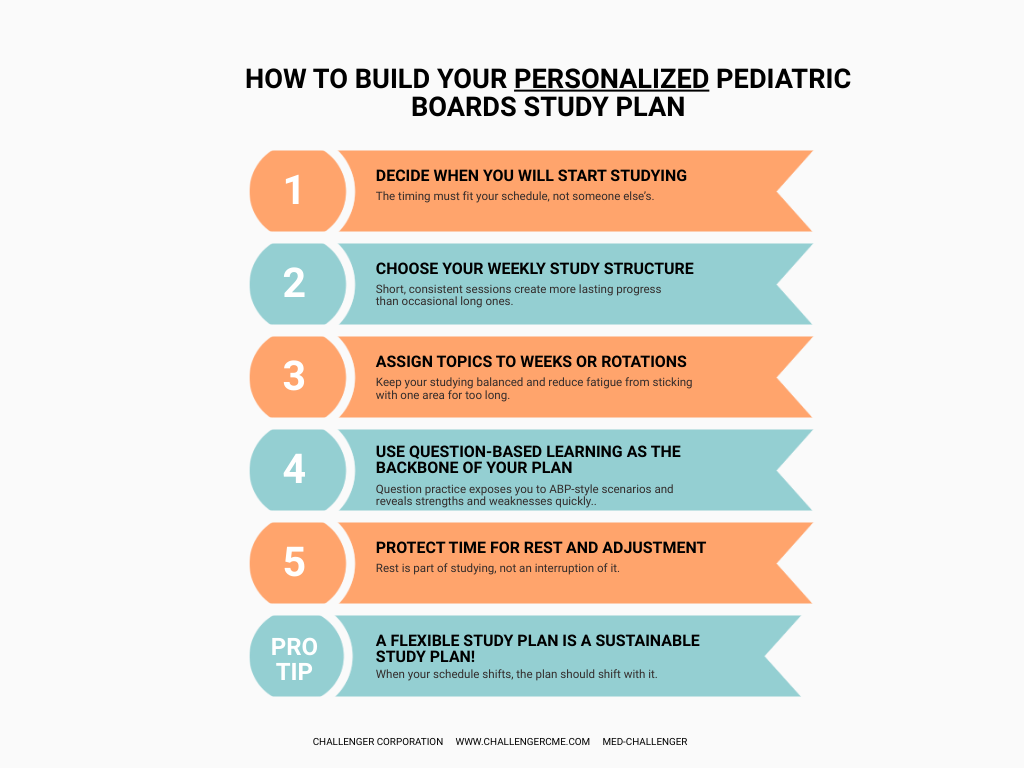
The timing must fit your schedule, not someone else’s.
A simple rule is to start earlier than you think you need to. Early studying allows for flexibility later and helps prevent long, stressful blocks of catch-up work.
👉ABP Exam Dates and Deadlines: What Pediatrics Residents Need to Know
Step 2: Choose Your Weekly Study Structure
Study plans fail most often because they are built around unrealistic expectations. You do not need multi-hour blocks every day. Short, consistent sessions create more lasting progress than occasional long ones.
A balanced weekly structure might include:
- Daily: 20–40 minutes of questions
- 2–3 times per week: Review of explanations and note-making
- Weekly: A longer consolidation session to revisit earlier material
This approach avoids burnout while reinforcing learning through repetition.
Step 3: Assign Topics to Weeks or Rotations
Some residents prefer to study by domain. Others prefer mixing topics throughout the week. This is an area where your learning style comes into play – you know yourself best so organize according to how you learn.
If you prefer domain-based studying:
Pair domains with rotations whenever possible.
Learning infectious diseases during ID consults or newborn topics during nursery blocks feels natural and improves retention.
If you prefer variety:
Mix high-yield general pediatrics topics with subspecialty material to keep your studying balanced and reduce fatigue from sticking with one area for too long.
👉ABP Content Outline Explained: How to Study All 24 Pediatric Domains
Step 4: Use Question-Based Learning as the Backbone of Your Plan
Because the ABP exam tests clinical reasoning, not recall, your study plan works best when it is built around question-based learning rather than reading alone. Question practice exposes you to ABP-style scenarios and reveals strengths and weaknesses quickly.
A simple goal is:
- Daily practice for consistency
- Weekly review for depth
- Regular reflection on incorrect answers
Your plan should make room for questions every week, even early in your preparation.
👉Study Strategies That Work for the ABP Pediatrics Board Exam
Step 5: Protect Time for Rest and Adjustment
Study plans collapse when they assume you have unlimited energy. Rest is part of studying, not an interruption of it. Heavy rotations require shorter daily sessions; lighter ones make room for longer reviews.
When your schedule shifts, the plan should shift with it. A flexible study plan is a sustainable study plan.
Sample Study Plans (Adaptable to Your Schedule)
Below are sample timelines you can use as a starting point. Adjust them based on your clinical schedule and personal needs and that will improve your chances of successfully following your schedule.
8-Week Intensive Plan
Best for residents who already have strong baseline knowledge but need structure in the final push.
Weeks 1–2:
- 20–30 questions per day
- Begin weekly consolidation reviews
- Mix high-yield general pediatrics with question review patterns
Weeks 3–4:
- Increase to 25–40 questions per day
- Continue consolidation sessions
- Revisit weaker reasoning patterns (diagnosis vs management)
Weeks 5–6:
- Full question sets under timed conditions
- Begin exam-day pacing practice
- Review ABP Universal Task categories to align reasoning
Weeks 7–8:
- Focus on reinforcement and pattern recognition
- Reduce volume slightly to maintain energy
- Begin exam-day logistics review
12-Week Balanced Plan
Best for residents with variable schedules or busier rotations.
Weeks 1–4:
- 20 questions per day
- Weekly consolidation
- Blend question review with targeted topic refreshers
Weeks 5–8:
- Increase to 25–30 questions per day
- Revisit earlier concepts using spaced repetition
- Focus on cross-topic reasoning
Weeks 9–12:
- Integrate timed sets
- Identify recurring mistakes and adjust strategy
- Reduce workload in final week to prevent fatigue
16-Week Long-Range Plan
Best for residents starting early or preferring low-intensity steady progress.
Weeks 1–8:
- 10–20 questions per day depending on rotation demands
- Build active recall notes
- Light consolidation sessions
Weeks 9–12:
- Increase intensity steadily
- Focus on explanation patterns and differential diagnosis cues
- Introduce timed blocks gradually
Weeks 13–16:
- Focus on deficiencies
- Revisit challenging question types
- Taper volume in the last week
👉What Topics Are Hardest on the ABP Exam? A Resident's Guide
FAQs
How many weeks should I study for the ABP exam?
There is no one magic guideline on study duration. Choose a timeline that matches your schedule and energy level.
Should my study plan follow the ABP domain weights?
The ABP publishes numerical weights for each domain, but your plan should reflect your personal strengths and weaknesses, not the outline alone.
Do I need to study every domain evenly?
No. Spend more time on areas you find difficult and revisit stronger areas periodically for long-term retention.
Should my plan be rigid?
No. Flexibility is essential, especially during unpredictable rotations.
Next Steps
If you are creating your first study plan:
Choose a timeline that feels manageable and begin with small daily question sessions.
If you want to refine your plan:
Revisit how well your current routine fits your schedule and adjust your weekly goals.
If you are several weeks into studying:
Evaluate your progress and shift more time toward areas where your reasoning feels less confident.
If you want structured support while following a plan:
Some study platforms organize questions, explanations, and progress tracking into formats that blend naturally with these study schedules. Tools such as Med-Challenger can help residents stay consistent by aligning question practice with weekly goals and monitoring performance over time.