family medicine boards
Beyond the Low ITE: Your Action Plan for Family Medicine Board Excellence
Let's dive into why the ITE matters and how you can overcome a low ITE score with the right preparation.
POCUS cobblestoning = nonpurulent cellulitis. Learn why beta-lactams beat TMP-SMX/doxycycline and when to add MRSA coverage.
.png)
For mild, nonpurulent cellulitis without abscess or MRSA risk factors, choose a narrow oral beta-lactam targeting streptococci; among these options, penicillin is best.

A 6 yo girl is brought to the ED because of a rash on her forearm. She is previously healthy and there is no history of skin and soft tissue infections in her immediate family. On exam, she is afebrile, non-toxic, and has no clinical abnormalities other than a 3 cm area of warmth, erythema, and tenderness on the volar aspect of her left forearm with some mild shotty axillary lymphadenopathy. A bedside ultrasound is performed and demonstrates increased echogenicity of the subcutaneous tissues with hyperechoic fat lobules separated by hypoechoic fluid-filled areas as seen in the image.
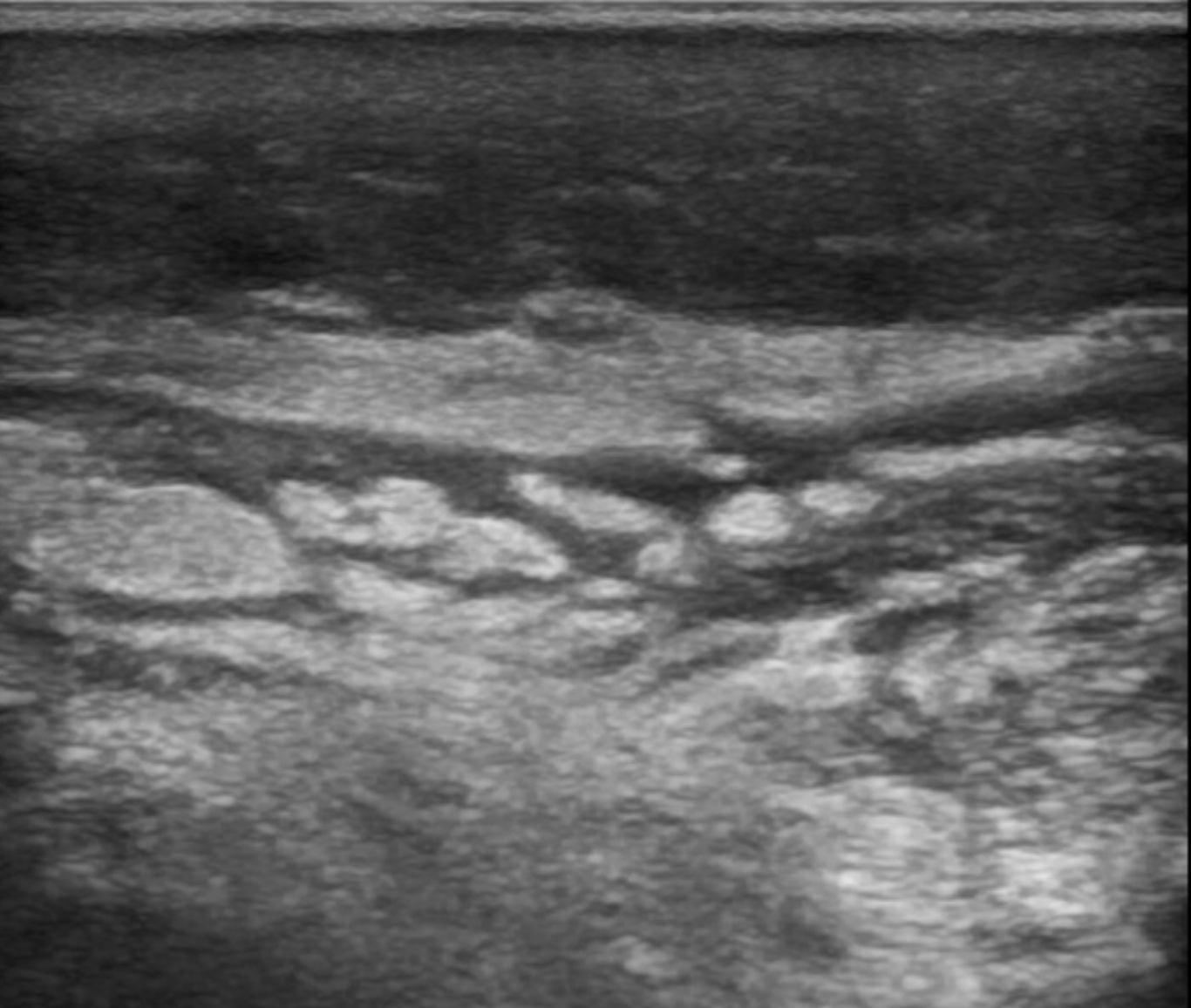 Image courtesy of Indi Trehan, MD
Which of the following would be the most appropriate antibiotic to prescribe for this patient?
Answer Options:
Examinees often miss this because they over-treat all cellulitis as “MRSA until proven otherwise,” especially when ultrasound is used; however, the ultrasound finding here (“cobblestoning”) supports cellulitis without abscess, where streptococci predominate and MRSA-directed therapy is not routinely indicated.
While many current pathways and board-prep algorithms commonly prefer cephalexin (or amoxicillin/clavulanate depending on scenario) for outpatient nonpurulent cellulitis because it covers streptococci and MSSA, those are not listed. Per IDSA SSTI guidance (2014, still exam-relevant), mild nonpurulent cellulitis should receive an agent active against streptococci; penicillin is an acceptable narrow option for streptococcal disease and is the best choice among the answer set. AAP Red Book similarly emphasizes beta-lactams for streptococcal cellulitis/erysipelas, reserving MRSA-active agents for purulence, abscess, or MRSA risk factors.
| Option | What It Tests / Implies | Why It’s Wrong Here |
| Clindamycin | MRSA coverage (and some GAS coverage) | Not needed in low-risk, nonpurulent cellulitis; avoid broader MRSA-directed therapy when not indicated (IDSA 2014). |
| Doxycycline | Community-acquired MRSA coverage | Poor/unreliable Group A Strep coverage; also generally avoided in young children in many exam settings (though acceptable ≥8 years). Not appropriate here. |
| Penicillin | Narrow streptococcal coverage | Best match for uncomplicated nonpurulent cellulitis presumed due to streptococci; best among listed options. |
| Trimethoprim/sulfamethoxazole | MRSA coverage | Unreliable streptococcal coverage; inappropriate for nonpurulent cellulitis when streptococci are primary pathogens (IDSA 2014). |
Nonpurulent cellulitis + no abscess on ultrasound + no MRSA risks → treat streptococci with an oral beta-lactam, not TMP-SMX or doxycycline.
The vignette gives you POCUS findings (cobblestoning) to tempt you into “more aggressive” MRSA therapy. Boards want you to notice the *absence* of a drainable collection and the low-risk host—then select streptococcal-directed therapy rather than defaulting to MRSA agents with weak GAS activity.
A 9-year-old with 2 days of expanding erythema and warmth on the calf, no fluctuance, afebrile, normal vitals, no MRSA history. Best oral outpatient antibiotic?
A 6-year-old has a tender arm lesion with fluctuance; ultrasound shows a 1.5 cm fluid collection. Afebrile, well-appearing. Best next step?
A 14-year-old with nonpurulent cellulitis and a history of MRSA infection last year. No abscess on ultrasound. Appropriate empiric oral regimen?
A clinician chooses TMP-SMX monotherapy for a child with classic nonpurulent cellulitis and no abscess. The main problem is:
A 7-year-old has a sharply demarcated, raised, tender erythematous plaque on the cheek with fever; no abscess. Most likely pathogen and best first-line class?
How would your empiric antibiotic choice change (and why) if this same child had (1) a drainable abscess on ultrasound, (2) prior MRSA colonization, or (3) a facial sharply demarcated erysipelas-like rash?
Q1: What does “cobblestoning” on ultrasound mean for boards?
A: It indicates subcutaneous edema consistent with cellulitis and helps rule in cellulitis while looking for an abscess; ABP/PEM-style questions use it to push you away from unnecessary I&D when no collection is seen.
Q2: When should you add MRSA coverage for cellulitis?
A: When there is purulence/abscess or MRSA risk factors (prior MRSA infection/colonization, close contacts, high-prevalence settings, etc.), consistent with IDSA Skin/Soft Tissue Infection guidance (2014).
Q3: Why aren’t doxycycline or TMP-SMX good monotherapy for nonpurulent cellulitis?
A: Because streptococci are the key pathogens and both have unreliable Group A Strep activity; boards test that you must not sacrifice GAS coverage.
Q4: What first-line outpatient drug do many pathways prefer if available?
A: Cephalexin (or similar first-generation cephalosporin) is commonly preferred because it covers streptococci and MSSA—this is a frequent exam-prep default even though it is not listed in this item.
Find this and other Pediatric Emergency Medicine exam prep questions in Med-Challenger Pediatric Emergency Medicine 3rd Edition Exam Review with CME
Try for free and save. Ace your exams and meet your CME/MOC requirements.



No matter your program, no matter the size, Med-Challenger for Groups and Institutions can better prepare your program or group, fulfill industry requirements, and increase test scores.
For personal medical education that includes board's prep, MOC, and CME requirements, Med-Challenger has you covered in Family Medicine, Emergency Medicine, Internal Medicine, Pediatrics, Pediatric Emergency Medicine, OBGYN, Physician Assistants, and Nurse Practitioners.
Let's dive into why the ITE matters and how you can overcome a low ITE score with the right preparation.
Learn how ABFM exam content weights shape what’s tested and how to study effectively using the 2025 domain-based blueprint for FM certification
What, if any, is the link between in-training examinations and board exams? Let's take a look.