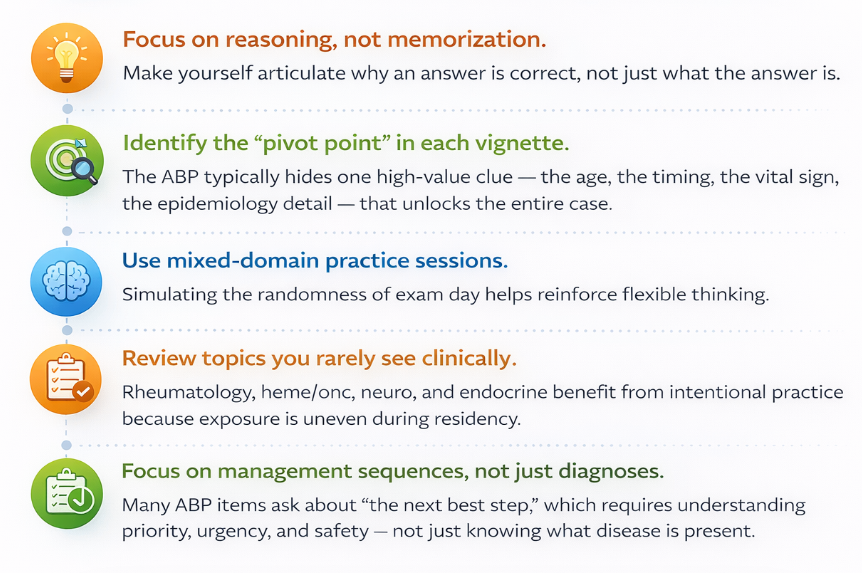
Preparing for the ABP General Pediatrics Certifying Exam is a long process, and the way you study matters just as much as what you study. The exam evaluates reasoning and clinical judgment, not just recall, which means the most effective preparation focuses on how you think about pediatric problems. Choosing strong study strategies early in your preparation helps you learn more efficiently and stay consistent even when residency becomes unpredictable.
Why Study Strategies Matter for ABP Success
Every question on the ABP exam aligns with a content domain and one of the ABP’s four Universal Task Categories: Diagnosis, Management, Epidemiology and Risk Assessment, or Physiology and Pathophysiology. These structures reinforce that the exam tests clinical reasoning. If your preparation focuses only on memorizing details, you miss the deeper reasoning patterns the exam expects. Strong study strategies help you practice those patterns before you ever sit down at Prometric.
Begin Question-Based Learning Early
Many residents wait until late in their study cycle to start using a question bank, but starting questions early makes a noticeable difference in how comfortable you become with ABP-style reasoning. You do not need to feel “fully prepared” before diving in. Even small sets of questions expose you to the exam’s structure and help you identify patterns in how diagnoses and management decisions are framed.
A simple way to begin is:
- 10–15 questions a day
- Focus on explanation quality, not score
- Slow, steady exposure rather than large irregular blocks
You learn the exam best by practicing the exam.
👉How ABP Exam Questions Are Written: the Logic Behind the Design
Compare popular ABP board prep Qbanks
| FEATURE |
Med-Challenger |
Rosh Review |
TrueLearn |
Board Vitals |
| Annual Price |
$359 / Year |
$549 / Year |
$419 / Year |
$499 / 6 Months |
| Flexible Monthly Option |
$35 / Month |
$509 / Month |
$209 / Month |
$199 / Month |
| ABP Board-style Questions |
1,771 |
2,400 |
1,350 |
1,700 |
| Follows ABP Exam Blueprint |
Yes |
Yes |
Yes |
Yes |
| AMA PRA Category 1 Credits™ |
135 included |
Paid add-on |
Paid add-on |
Paid add-on |
| ABP MOC Part 2 Credits |
135 included |
None |
None |
Paid add-on |
| Adaptive Exam Simulators |
Yes |
No |
No |
Yes |
| "Weak Area" Detailed Remediation |
Yes |
Yes |
Yes |
Yes |
| Supplemental AI Content |
Yes |
No |
No |
No |
| Custom Exams |
Yes |
Yes |
Yes |
Yes |
| 100% Pass-guaranteed |
Yes |
Yes |
Yes |
Yes |
Use Active Recall Instead of Passive Reading
Reading creates familiarity but not retention. Active recall — retrieving information without looking — builds long-term memory far more effectively.
Examples of active recall during ABP prep include:
- Closing your notes and explaining a concept out loud
- Predicting the answer before revealing explanation text
- Summarizing the “takeaway” of each question in one sentence
- Writing short prompts and answering them later without context
If you cannot restate a concept in your own words, that concept is not yet exam-ready.
Add Spaced Repetition to Reinforce What You Learn
Spaced repetition means revisiting material at increasing intervals to strengthen memory. It works especially well in busy residency schedules because you do not have to re-learn material each time you return to it.
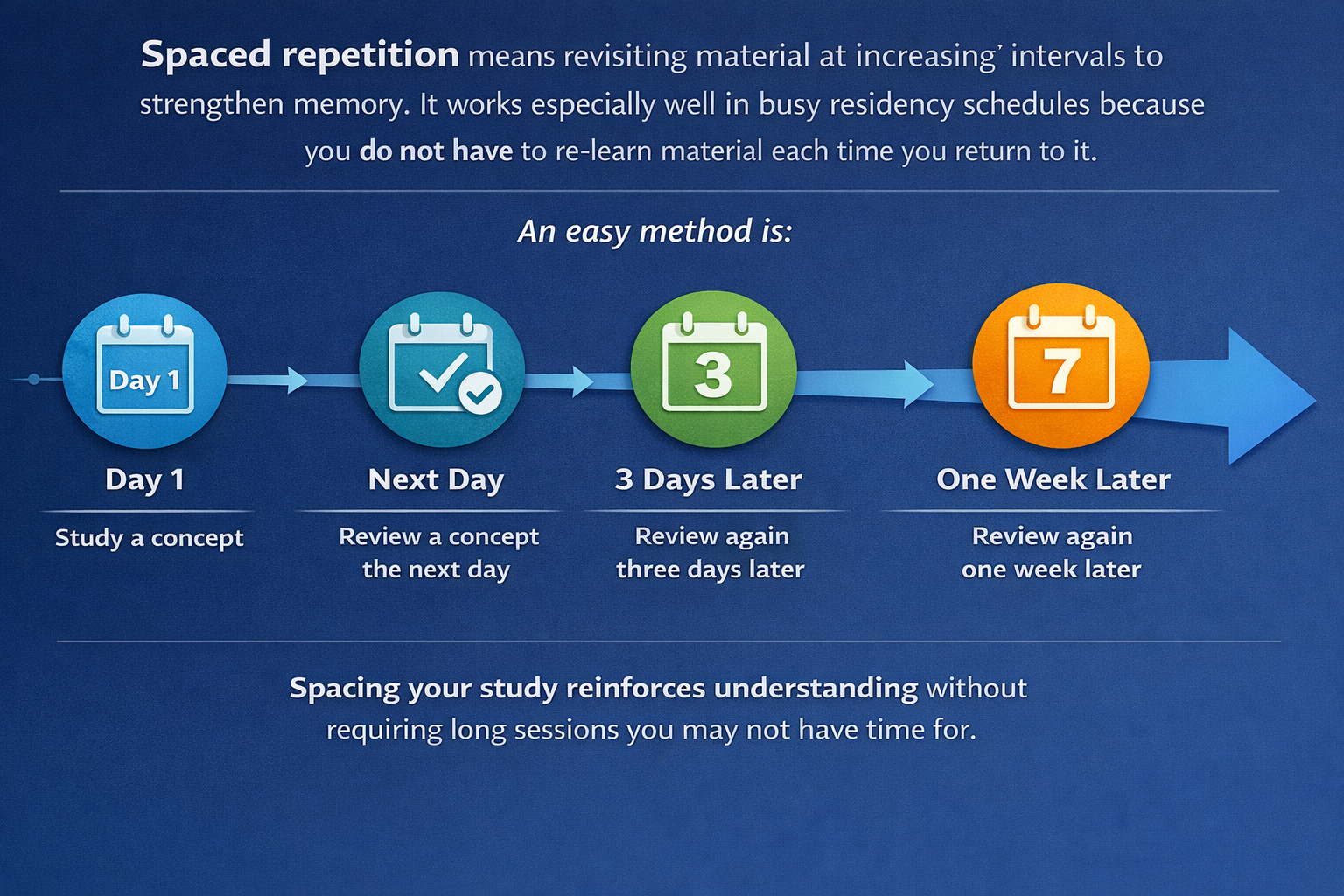
Spacing your study reinforces understanding without requiring long sessions you may not have time for.
👉What Topics Are Hardest on the ABP Exam? A Resident's Guide
Study With Clinical Reasoning in Mind
The ABP exam rewards clinical reasoning over memorization. When reviewing explanations, pay attention to how the question guides you toward the correct answer.
Ask yourself:
- What key detail directed the differential?
- Why is each incorrect choice wrong?
- What management decision would come next in real practice?
Thinking through each question as if you were caring for a patient helps you internalize the reasoning behind correct answers.
Connect Your Study Approach to the Universal Task Categories
Although you do not need to study the Universal Tasks separately, they are helpful for structuring your thinking. After each practice question, consider which task the item was testing:
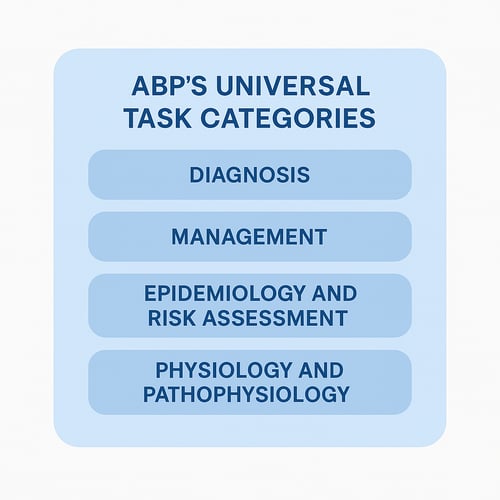
This habit strengthens the cognitive patterns the ABP uses to shape exam questions.
👉ABP Content Outline Explained: How to Study All 24 Pediatric Domains
Use Explanations as Mini-Lessons
Question explanations do more than justify the correct answer — they teach reasoning. Your learning accelerates when you review every explanation, not just the ones for your incorrect answers. Even correct responses may reflect partial understanding or lucky guesses.
A consistent review routine might include:
- Read the full explanation
- Identify the takeaway concept
- Note the reasoning pattern used
- Revisit the concept later using active recall
Explanations are where most of the learning happens, not the answer choices.
Avoid Common Inefficient Study Habits
Many residents unintentionally slow their progress by relying on ineffective study habits:
- Rereading large sections of content without testing understanding
- Delaying question practice until “everything is reviewed”
- Studying long lists without context
- Switching topics frequently, reducing continuity
- Focusing on performance metrics over learning
Recognizing these patterns early helps you shift toward strategies that genuinely improve retention and clinical reasoning.
👉How to Build Your Pediatrics Board Study Plan
Combine Short Daily Sessions With Weekly Consolidation
Short daily sessions help maintain consistency, while slightly longer weekly sessions allow you to connect themes across different areas of pediatrics. You do not need multi-hour blocks to make progress — steady engagement matters more.
A balanced study structure might include:
- Daily: 20–40 minutes of questions
- Mid-week: Review explanation patterns
- Weekly: One longer session to revisit prior material
This rhythm keeps you progressing without overwhelming you.
Plan for Mental Energy, Not Just Time
Studying during residency means acknowledging that your cognitive energy varies. A sustainable approach values consistency over intensity.
Helpful practices include:
- Studying when you are most alert
- Stopping before you hit burnout
- Breaking up studying on heavy rotation weeks
- Protecting rest during call blocks
The goal is steady, realistic progress — not perfection.
FAQs
How many questions should I complete during exam prep?
There is no required number. Focus on consistent, meaningful question work rather than total volume.
When should I start using a question bank?
Start early, even with small sets. Early exposure builds comfort with ABP-style reasoning.
Should I take notes while studying?
Use short, focused notes only when they reinforce reasoning or highlight patterns. Long notes rarely improve retention.
Is group studying useful?
It can be. Use group sessions to explain concepts aloud or compare reasoning, not to read silently together.
Next Steps
If you are beginning your ABP exam preparation:
Start with small daily blocks of question-based learning and use active recall to reinforce new concepts.
If you want to strengthen your approach:
Integrate spaced repetition and intentional review of reasoning patterns into your weekly schedule.
If you have been studying for several weeks:
Evaluate your incorrect answers and adjust your strategy to focus more on clinical reasoning than fact memorization.
If you prefer structured support:
Some study platforms organize questions and explanations in a way that reinforces these strategies. Tools such as Med-Challenger allow you to practice questions, review explanations, and track progress in formats that support consistent study habits throughout residency.