Physicians who want to become certified in pediatric emergency medicine must meet specific eligibility requirements before they can take the Pediatric Emergency Medicine (PEM) board exam. These requirements ensure that candidates have completed appropriate subspecialty training and demonstrated the clinical competence needed to care for critically ill and injured children in emergency settings.
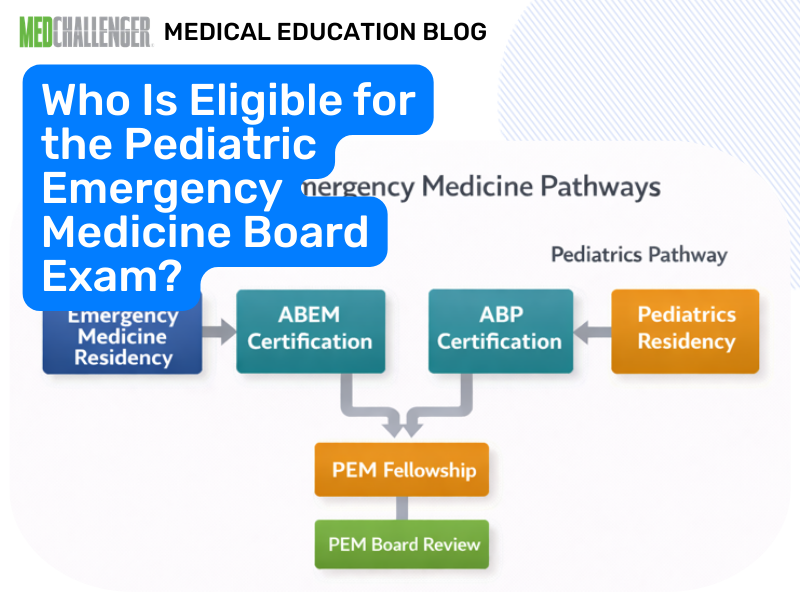
The pediatric emergency medicine board exam is administered jointly by the American Board of Pediatrics (ABP) and the American Board of Emergency Medicine (ABEM). Because the specialty bridges pediatrics and emergency medicine, physicians may enter the certification pathway through either primary discipline. However, all candidates must complete accredited fellowship training and meet certification standards established by the boards.

If you are planning to pursue certification, understanding the eligibility requirements for the Pediatric Emergency Medicine board exam early in training can help ensure you meet all criteria before applying. For a complete overview of the exam process, see the Pediatric Emergency Medicine Board Exam Guide.
Who Can Apply for the Pediatric Emergency Medicine Board Exam?
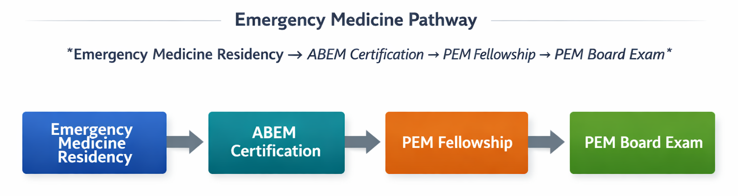
To apply for the pediatric emergency medicine board exam, physicians must first hold certification in an eligible primary specialty.

This dual certification pathway reflects the interdisciplinary nature of pediatric emergency medicine. Physicians trained in either pediatrics or emergency medicine can pursue subspecialty certification after completing fellowship training.
Physicians applying through the emergency medicine pathway must also participate in their board’s continuing certification program and maintain an unrestricted medical license throughout the certification process.
What Fellowship Training Is Required for PEM Exam Eligibility?
Completion of an accredited pediatric emergency medicine fellowship is the most important eligibility requirement for the PEM board exam.
Physicians entering through the pediatric pathway must complete three years of full-time fellowship training in a program accredited by the Accreditation Council for Graduate Medical Education (ACGME) or the Royal College of Physicians and Surgeons of Canada.
These fellowship programs provide advanced training in the evaluation and management of pediatric emergencies. Fellows develop expertise in areas such as:
- Pediatric trauma and injury management
- Resuscitation and airway management
- Pediatric toxicology
- Emergency procedures
- Disaster preparedness and emergency systems of care
By the end of fellowship training, physicians must demonstrate the knowledge and clinical judgment required for independent subspecialty practice in pediatric emergency departments.
What Additional Requirements Must Candidates Meet?
In addition to fellowship training, several other requirements must be satisfied before physicians can take the pediatric emergency medicine board exam.
Verification of Training
Before applying for certification, the fellowship program director must verify that the physician has successfully completed all training requirements and demonstrated clinical competence in pediatric emergency medicine.
Without this verification, candidates cannot be approved to sit for the certification examination.
Scholarly Activity
Pediatric emergency medicine fellows must also complete a scholarly project during fellowship training. This requirement helps develop skills in research methodology, evidence-based medicine, and critical analysis of medical literature.
Acceptable scholarly work products may include:
- Research manuscripts
- Peer-reviewed publications
- Quality improvement initiatives
- Educational or policy research projects
- Grant applications
Fellows must produce a written work product demonstrating meaningful scholarly engagement before certification eligibility is granted.
Medical Licensure
Candidates must maintain a valid and unrestricted medical license in at least one jurisdiction in the United States or Canada.
👉 How to Register for the Pediatric Emergency Medicine Board Exam
What Can Affect Eligibility for the PEM Board Exam?
Certain circumstances during training can affect eligibility for the pediatric emergency medicine board exam.
Extended interruptions in fellowship training may require review by the certifying board to determine whether previously completed training still counts toward certification requirements.
This policy ensures that physicians entering the certification process have recently completed training and remain current with developments in pediatric emergency medicine practice.
Candidates should therefore work closely with their fellowship program directors to confirm that all training milestones and documentation requirements have been satisfied before applying for the exam.
Why These Eligibility Requirements Matter
The eligibility requirements for the pediatric emergency medicine board exam are designed to ensure that physicians entering the certification process have completed rigorous subspecialty training and demonstrated competence in the field.
Accredited fellowship training, scholarly activity, and verification of clinical competence help ensure that pediatric emergency medicine specialists are prepared to care for critically ill and injured children in emergency settings.
Meeting these requirements is the first step toward board certification and a career in pediatric emergency medicine.
Frequently Asked Questions
Do you have to complete fellowship to take the PEM board exam?
Yes. Completion of accredited pediatric emergency medicine fellowship training is required before physicians can apply for the certification examination.
Can emergency physicians take the pediatric emergency medicine board exam?
Yes. Physicians certified in emergency medicine may pursue pediatric emergency medicine certification after completing an accredited PEM fellowship and meeting eligibility requirements.
How long is pediatric emergency medicine fellowship training?
Most pediatric emergency medicine fellowship programs require three years of training before candidates become eligible for certification.
Can interruptions in training affect eligibility?
Yes. Extended interruptions in fellowship training may require review by the certifying board to determine whether previously completed training still counts toward certification requirements.
Next Step: Understanding the PEM Board Exam Blueprint
After confirming eligibility, the next step in preparing for the pediatric emergency medicine board exam is understanding the structure of the exam itself.
In the guide, Understanding the Pediatric Emergency Medicine Board Exam Blueprint, we explain how the exam content is organized and which clinical domains appear most frequently on the test.