Last updated: March 2026
Physicians pursuing subspecialty certification in pediatric emergency medicine must pass a rigorous examination designed to assess the knowledge and clinical reasoning required to manage critically ill and injured children. The Pediatric Emergency Medicine (PEM) board exam represents the final step in the certification pathway for physicians who complete fellowship training in this specialty.
Because pediatric emergency medicine sits at the intersection of pediatrics and emergency medicine, the certification process is administered jointly by the American Board of Pediatrics (ABP) and the American Board of Emergency Medicine (ABEM). These organizations work together to define eligibility requirements, develop the examination blueprint, and ensure that physicians who pass the exam demonstrate the knowledge necessary for independent subspecialty practice.

For physicians preparing for certification, understanding how the exam works—its eligibility requirements, blueprint, and testing framework—can significantly improve preparation efficiency. This guide explains how the pediatric emergency medicine board exam is structured and how physicians can prepare strategically.
👉 Start preparing now with Med-Challenger’s Pediatric Emergency Medicine Review
What Is the Pediatric Emergency Medicine Board Exam?
The Pediatric Emergency Medicine board exam is the certifying examination for physicians seeking subspecialty certification in pediatric emergency medicine.
Pediatric emergency medicine focuses on the diagnosis and management of acute illness and injury in infants, children, and adolescents in emergency care settings. Physicians who practice in this field must be able to rapidly evaluate unstable patients, initiate life-saving treatment, and coordinate complex care.
Certification in this subspecialty requires physicians to demonstrate advanced knowledge of pediatric emergencies, trauma management, toxicology, resuscitation, and emergency department operations.
The certification process involves:
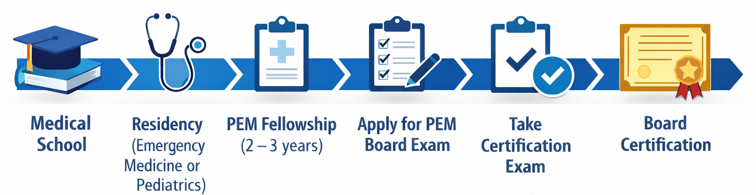
The examination is offered periodically and represents the final step in confirming that a physician has achieved the knowledge expected of a practicing pediatric emergency medicine subspecialist.
👉 What to Expect on the Pediatric Emergency Medicine Board Exam
Who Administers the Pediatric Emergency Medicine Board Exam?
Certification in pediatric emergency medicine is jointly administered by two specialty boards:
- American Board of Pediatrics (ABP)
- American Board of Emergency Medicine (ABEM)
Physicians may enter the certification pathway through either board depending on their primary specialty training.
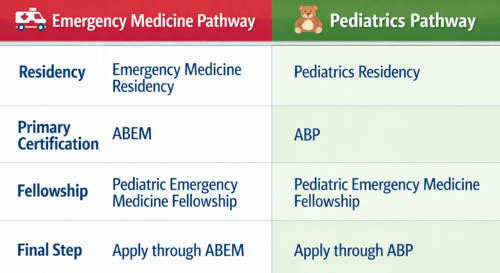
Candidates must hold board certification in either pediatrics or emergency medicine before applying for pediatric emergency medicine certification.
Because the specialty spans both disciplines, the exam evaluates knowledge that integrates pediatric medicine with emergency care.
Eligibility Requirements for the Pediatric Emergency Medicine Board Exam
Physicians must meet specific eligibility requirements before applying to take the pediatric emergency medicine certification examination.
Fellowship Training
The most important eligibility requirement is completion of an accredited pediatric emergency medicine fellowship.
Candidates applying through the American Board of Pediatrics pathway must complete three years of full-time fellowship training in a program accredited by the Accreditation Council for Graduate Medical Education (ACGME) or the Royal College of Physicians and Surgeons of Canada.
The fellowship provides advanced clinical training in pediatric emergency care, trauma management, resuscitation, and emergency procedures.
Primary Board Certification
Candidates must already hold certification in either:
- General Pediatrics (ABP), or
- Emergency Medicine (ABEM or AOBEM)
Physicians entering through the emergency medicine pathway must also participate in their board’s continuing certification program and maintain appropriate medical licensure.
Verification of Training
Before candidates can sit for the exam, their fellowship program director must verify that the physician has:
- Successfully completed the required fellowship training
- Demonstrated satisfactory clinical competence
- Fulfilled all professional and scholarly activity requirements
👉 Who Is Eligible for the Pediatric Emergency Medicine Board Exam?
Scholarly Activity Requirements During Fellowship
Pediatric emergency medicine fellows must complete scholarly activity during training.
The ABP requires fellows to participate in a structured scholarly project designed to develop skills in research methodology, evidence-based medicine, and critical analysis of medical literature.
Examples of acceptable scholarly work products include:
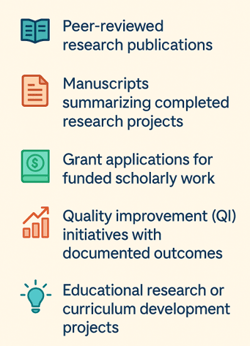
Completion of this scholarly work is verified by the fellowship program director and must be documented before candidates are eligible to apply for certification.
Understanding the Pediatric Emergency Medicine Exam Blueprint
One of the most effective ways to prepare for the pediatric emergency medicine board exam is to understand the exam blueprint.
The American Board of Pediatrics publishes a detailed content outline that defines the knowledge areas tested on the examination. The outline was developed through collaboration with practicing pediatric emergency medicine subspecialists and reflects the knowledge required in real-world clinical practice.
The blueprint organizes exam content into 13 major domains.
Pediatric Emergency Medicine Exam Content Domains
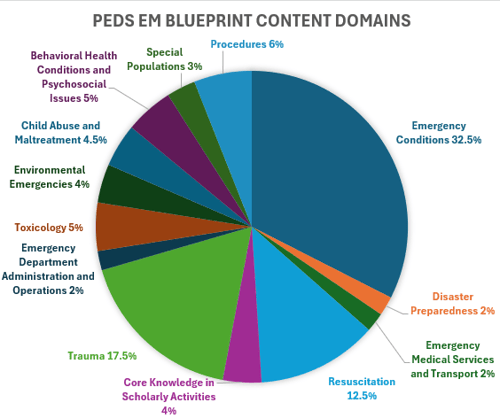
Each exam question is classified according to one of these domains.
This blueprint ensures that the examination evaluates the full scope of pediatric emergency medicine practice.
👉 Understanding the Pediatric Emergency Medicine Board Exam Blueprint
High-Yield Topics on the Pediatric Emergency Medicine Board Exam
Although the exam covers a broad range of topics, some areas appear more frequently than others.
The largest portion of the exam focuses on emergency conditions, which account for approximately one-third of exam questions. These include infectious diseases, cardiovascular emergencies, neurologic conditions, and metabolic disorders encountered in pediatric emergency departments.
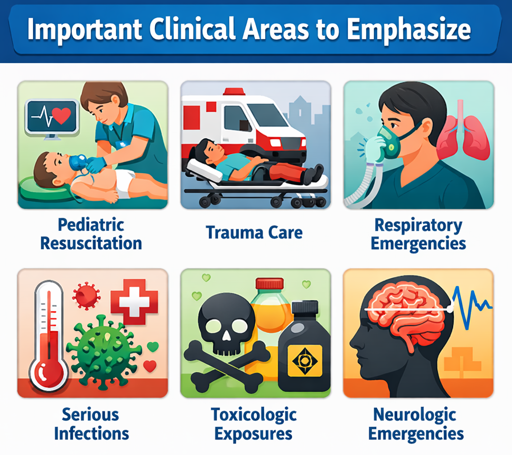
Understanding the relative emphasis of these domains allows candidates to prioritize study topics more effectively.
👉 How to Register for the Pediatric Emergency Medicine Board Exam
How Questions on the PEM Board Exam Are Structured
Questions on the pediatric emergency medicine certification exam are designed to reflect real clinical scenarios.
Rather than simply testing memorization, exam questions evaluate how physicians apply knowledge to patient care.
To support this goal, questions are categorized according to three universal tasks:
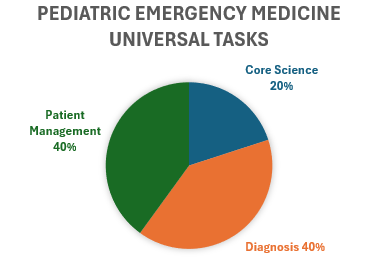 Most questions require candidates to integrate clinical information, interpret findings, and choose appropriate management strategies.
👉 How the Pediatric Emergency Medicine Board Exam Is Scored
Systems-Based Topics Tested on the PEM Boards
While clinical knowledge forms the majority of the exam, pediatric emergency physicians must also understand healthcare systems and emergency department operations.
For this reason, the exam also includes domains addressing:
- Disaster preparedness and mass casualty response
- Emergency medical services systems
- Emergency department administration
- Legal and ethical considerations in emergency care
These topics reflect the leadership and systems-based responsibilities of physicians working in pediatric emergency departments.
👉 Common Mistakes on the Pediatric Emergency Medicine Board Exam
How the Pediatric Emergency Medicine Exam Reflects Clinical Practice
The pediatric emergency medicine exam blueprint was developed using input from practicing PEM subspecialists who identified the knowledge areas most critical to clinical care.
Subspecialists rated both the frequency and clinical importance of different topics in pediatric emergency medicine practice. Domains that were both common and clinically critical were assigned greater weight on the exam.
This process helps ensure that the examination measures the knowledge physicians use most frequently in real emergency care settings.
👉 Maintaining Pediatric Emergency Medicine Board Certification
Study Strategies for the Pediatric Emergency Medicine Boards
Preparing effectively for the pediatric emergency medicine boards requires a structured approach.
Most physicians begin preparing during the final year of fellowship training. A successful study plan typically includes:
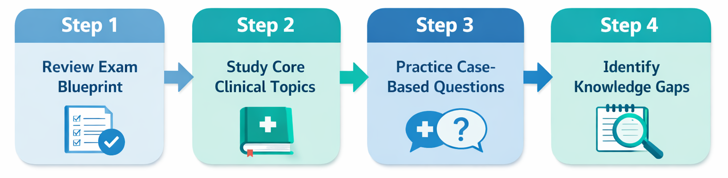
Because the exam emphasizes clinical decision-making, case-based study materials are particularly helpful.
Candidates should also ensure they review smaller exam domains such as disaster preparedness and EMS systems, which are often overlooked during preparation.
👉 Creating a Study Plan for the Pediatric Emergency Medicine Boards
Frequently Asked Questions About the Pediatric Emergency Medicine Board Exam
How long is pediatric emergency medicine fellowship training?
Most fellowship programs require three years of accredited training before physicians are eligible to take the certification examination.
Who can take the pediatric emergency medicine board exam?
Physicians must hold certification in pediatrics or emergency medicine and complete accredited fellowship training in pediatric emergency medicine before applying for certification.
What topics are tested on the PEM board exam?
The exam covers 13 domains of pediatric emergency medicine, including emergency conditions, trauma, resuscitation, toxicology, procedures, and systems-based practice topics.
Is scholarly activity required during fellowship?
Yes. Fellows must complete a scholarly activity project and produce a written work product during training.
How often is the pediatric emergency medicine certification exam offered?
The exam is offered periodically by the certifying boards as part of the subspecialty certification process.
Next steps for PEM Board Preparation
Passing the pediatric emergency medicine board exam requires mastery of a broad range of clinical knowledge and the ability to apply that knowledge to real emergency scenarios.
Understanding the exam blueprint, completing fellowship training requirements, and developing a structured study strategy are essential steps toward certification.
Physicians who approach preparation systematically—focusing on high-yield clinical topics, strengthening diagnostic reasoning, and practicing board-style questions—can approach the pediatric emergency medicine certification exam with confidence.