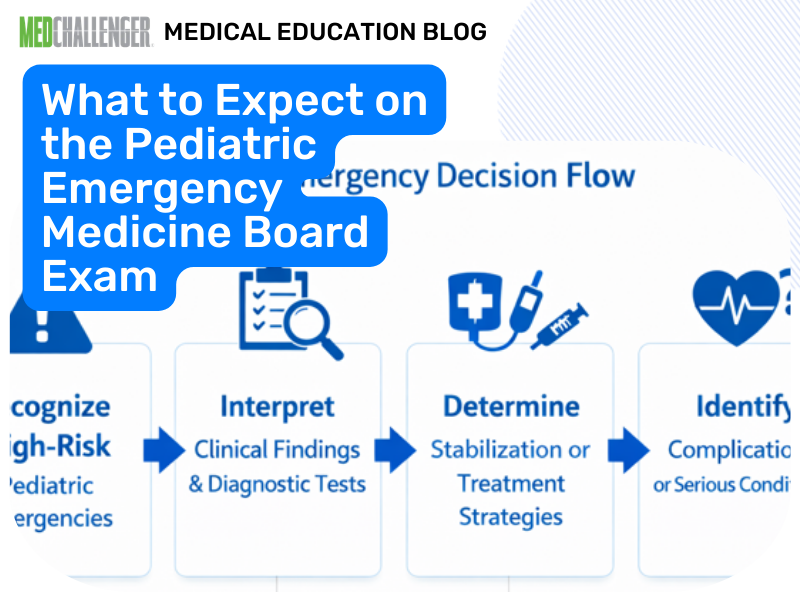
Physicians preparing for the Pediatric Emergency Medicine (PEM) board exam often want to know what the testing experience is actually like. Beyond understanding the eligibility requirements and exam blueprint, it is important to know how the exam is structured, what types of questions are asked, and how the test reflects real-world pediatric emergency care.
The Pediatric Emergency Medicine certification exam is designed to evaluate whether physicians possess the clinical knowledge and judgment necessary to practice independently as pediatric emergency medicine specialists. The exam focuses heavily on real clinical scenarios, requiring candidates to interpret patient information, make diagnoses, and determine appropriate management strategies.
Understanding what to expect on the Pediatric Emergency Medicine board exam can help candidates approach the test with confidence and prepare more effectively. For a full overview of certification requirements, see the Pediatric Emergency Medicine Board Exam Guide.
How the Pediatric Emergency Medicine Board Exam Is Designed
The pediatric emergency medicine certification exam is developed by the American Board of Pediatrics in collaboration with practicing pediatric emergency medicine physicians. These subject-matter experts help ensure that the exam reflects the clinical knowledge required in real emergency department practice.
Each exam question is written and reviewed by specialists who identify the clinical problems pediatric emergency physicians encounter most frequently. The exam blueprint ensures that these clinical situations are represented appropriately across the test.
This process helps ensure that the exam measures the knowledge and clinical reasoning physicians need to manage acute pediatric illness and injury.
Clinical Scenario–Based Questions
Most questions on the pediatric emergency medicine board exam are presented as clinical scenarios. Rather than asking candidates to recall isolated facts, questions typically describe a patient encounter and ask the physician to determine the most appropriate next step.
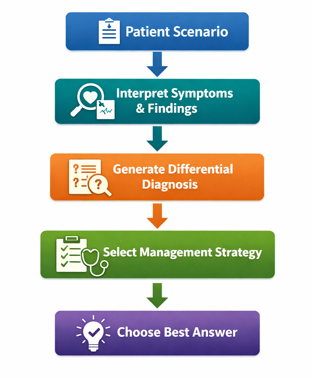
Candidates must interpret the information provided in the scenario, identify the most likely diagnosis, and select the best management strategy.
These case-based questions reflect how physicians make decisions in real emergency department settings.
Types of Knowledge Tested
The pediatric emergency medicine exam evaluates several types of knowledge that physicians use during clinical care.
The exam blueprint organizes these tasks into three categories:
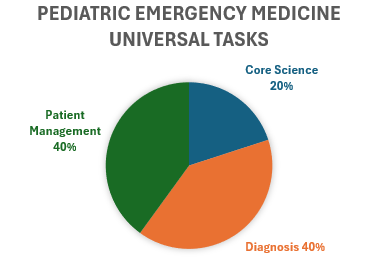
Core Science
This category assesses understanding of the scientific principles underlying disease processes, including pathophysiology, pharmacology, and mechanisms of injury.
Diagnosis
Diagnostic questions test a candidate’s ability to interpret clinical findings, laboratory values, imaging results, and patient history to determine the underlying condition.
Patient Management
Management questions assess the ability to choose appropriate treatments, perform emergency procedures, and determine patient disposition.
Many questions require candidates to integrate all three skills within a single clinical scenario.
Breadth of Topics on the PEM Board Exam
Because pediatric emergency physicians manage a wide range of medical problems, the certification exam covers many different areas of clinical medicine.
Major content domains tested on the exam include:
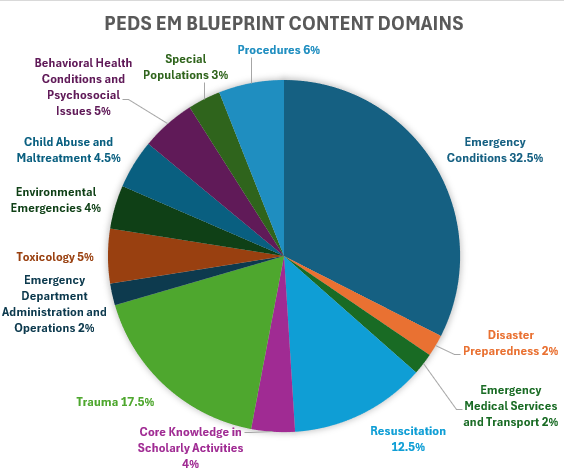
In addition to clinical medicine, the exam also includes topics related to emergency department systems and disaster preparedness.
👉 Understanding the Pediatric Emergency Medicine Board Exam Blueprint
Systems-Based and Operational Topics
Although clinical medicine represents the majority of the exam, pediatric emergency physicians must also understand how emergency care systems function.
For this reason, the exam may include questions related to:
- Emergency medical services (EMS) systems
- Patient transport and interfacility transfer
- Disaster response and mass casualty events
- Emergency department administration and workflow
- Legal and ethical issues in emergency care
These systems-based questions reflect the leadership roles pediatric emergency physicians often play in emergency departments.
👉 Creating a Study Plan for the Pediatric Emergency Medicine Boards
How the Exam Reflects Real Pediatric Emergency Practice
The pediatric emergency medicine board exam is designed to measure knowledge that physicians actually use in clinical practice.
During development of the exam blueprint, practicing pediatric emergency physicians rated how frequently different conditions occur and how important they are to patient care. Topics that are both common and clinically significant were given greater emphasis on the exam.
As a result, candidates should expect many questions to focus on conditions commonly encountered in pediatric emergency departments, such as respiratory illness, trauma, infectious disease, and resuscitation.
How Candidates Typically Experience the Exam
Candidates often find that the pediatric emergency medicine board exam tests clinical reasoning more than memorization.
Rather than focusing on obscure facts, most questions ask physicians to apply knowledge to clinical scenarios similar to those encountered during fellowship training.

Approaching the exam as an extension of clinical practice can make preparation more effective and improve confidence on exam day.
Frequently Asked Questions
Are questions on the pediatric emergency medicine board exam case-based?
Yes. Most exam questions are presented as clinical scenarios that require candidates to interpret patient information and determine the appropriate diagnosis or management.
Does the PEM board exam test clinical decision-making?
Yes. The exam focuses heavily on diagnosis and patient management, reflecting the real-world decision-making responsibilities of pediatric emergency physicians.
Are non-clinical topics included on the exam?
Yes. In addition to clinical medicine, the exam includes systems-based topics such as disaster preparedness, EMS systems, and emergency department administration.
Is the exam based on real clinical practice?
Yes. The exam blueprint was developed using input from practicing pediatric emergency physicians to ensure the test reflects real-world clinical practice.
Next Step: How the Pediatric Emergency Medicine Board Exam Is Scored
Understanding the exam format is an important step in preparing for certification. Another common question candidates ask is how the exam is scored and how the passing standard is determined.
In our guide, How the Pediatric Emergency Medicine Board Exam Is Scored, we explain how exam results are calculated and how pass–fail decisions are made for the pediatric emergency medicine certification exam.