Physicians preparing for the Pediatric Emergency Medicine (PEM) board exam often begin by asking a simple question: what exactly is tested on the exam? The answer lies in the official Pediatric Emergency Medicine exam blueprint, sometimes called the content outline.
The blueprint defines the knowledge areas covered on the pediatric emergency medicine board exam and indicates how frequently each topic appears on the test. It was developed by the American Board of Pediatrics in collaboration with practicing pediatric emergency medicine specialists to ensure the exam reflects real-world clinical practice.
Understanding the PEM board exam blueprint is one of the most effective ways to organize study time and focus on the topics most likely to appear on the certification exam. For a broader overview of the certification process, see the Pediatric Emergency Medicine Board Exam Guide.
What Is the Pediatric Emergency Medicine Exam Blueprint?
The pediatric emergency medicine exam blueprint is the official framework used to design the certification examination. It identifies the clinical knowledge, procedural skills, and systems-based topics that candidates are expected to understand before entering independent practice.
Each exam question is assigned to a category within the blueprint. This ensures that the exam evaluates the full scope of pediatric emergency medicine practice rather than focusing narrowly on a single area of medicine.
The blueprint was developed using input from practicing pediatric emergency medicine physicians who identified the conditions and clinical situations most frequently encountered in emergency departments. Topics that are both common and clinically important were given greater representation on the exam.
Major Content Domains Tested on the PEM Board Exam
The pediatric emergency medicine board exam blueprint organizes exam questions into 13 major content domains, each representing a key area of pediatric emergency medicine practice.
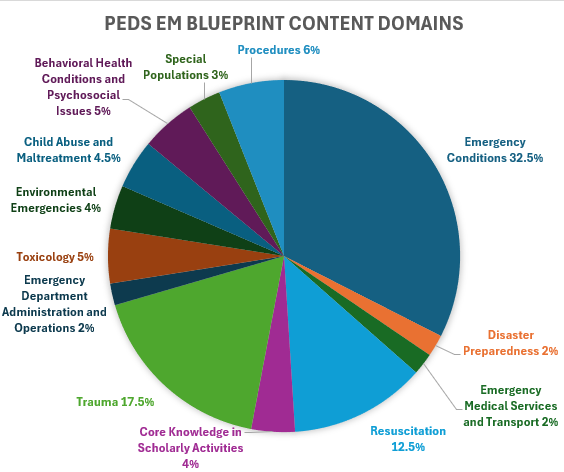
Together, these categories reflect the wide range of medical, procedural, and systems-based knowledge required for pediatric emergency physicians.
Which Topics Appear Most Frequently on the Exam?
While the exam covers many topics, some areas appear much more frequently than others.
The largest portion of the pediatric emergency medicine board exam focuses on emergency conditions, which account for roughly one-third of exam questions. These include conditions such as infectious diseases, neurologic emergencies, metabolic disorders, and cardiovascular problems that commonly present in pediatric emergency departments.
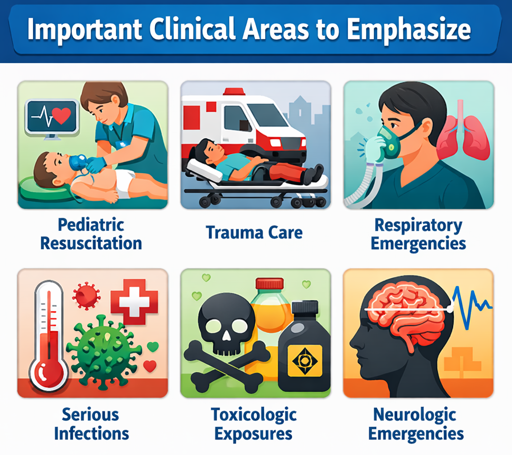
Understanding these relative exam weights can help candidates allocate study time more efficiently.
Universal Tasks: How Clinical Knowledge Is Tested
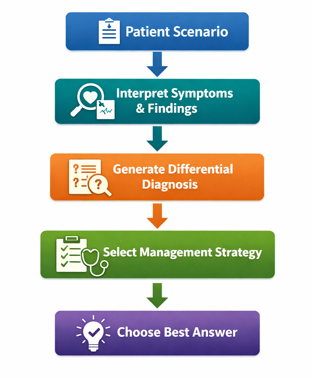
In addition to content domains, the pediatric emergency medicine exam blueprint also classifies questions according to three “universal tasks.” These tasks describe how physicians apply knowledge in clinical practice.
The three universal tasks are:

Core Science
This category evaluates understanding of the scientific principles underlying disease and injury, including pathophysiology, pharmacology, and mechanisms of illness.
Diagnosis
These questions test the ability to interpret clinical information, including history, physical examination findings, laboratory results, and imaging studies.
Patient Management
Management questions assess a physician’s ability to develop treatment plans, perform appropriate procedures, and determine safe patient disposition.
Most exam questions require candidates to integrate these skills in clinical scenarios.
👉 How the Pediatric Emergency Medicine Board Exam Is Scored
Systems-Based Knowledge on the PEM Boards
Although clinical medicine accounts for the majority of the exam, the pediatric emergency medicine board exam also evaluates knowledge related to healthcare systems and emergency department operations.
Examples of systems-based topics include:
- Disaster response and mass casualty management
- Emergency medical services (EMS) systems and transport
- Emergency department workflow and administration
- Legal and ethical issues in pediatric emergency care
These areas represent responsibilities that pediatric emergency physicians often assume as leaders in emergency care systems.
Why the Exam Blueprint Matters for Study Planning
Understanding the PEM board exam blueprint allows candidates to study strategically rather than trying to review every topic equally.
Because some domains appear far more frequently than others, many candidates prioritize high-yield areas such as:
- Emergency conditions
- Trauma
- Resuscitation
- Procedures
- Toxicology
Smaller domains such as disaster preparedness or EMS systems still appear on the exam, but they represent a smaller percentage of questions.
A structured study plan should therefore balance high-yield clinical topics with targeted review of smaller blueprint categories.
👉 Creating a Study Plan for the Pediatric Emergency Medicine Boards
Frequently Asked Questions
What is the pediatric emergency medicine exam blueprint?
The exam blueprint is the official content outline used by the American Board of Pediatrics to define the knowledge areas tested on the pediatric emergency medicine certification exam.
How many domains are included in the PEM board exam blueprint?
The blueprint includes 13 major content domains covering clinical medicine, procedures, systems-based practice, and scholarly knowledge.
Which topics appear most frequently on the PEM board exam?
Emergency conditions represent the largest portion of exam questions, followed by trauma, resuscitation, procedures, and toxicology.
Does the exam test clinical reasoning?
Yes. Most exam questions evaluate clinical decision-making, including diagnosis and patient management in emergency scenarios.
Next Step: What to Expect on the Pediatric Emergency Medicine Board Exam
Once you understand the exam blueprint, the next step is learning how the exam is structured.
In our guide, What to Expect on the Pediatric Emergency Medicine Board Exam, we explain the exam format, question style, and testing experience so candidates know what to expect on exam day.